If you've been meaning to do something about your garage floor, do it before the first snow. Winter is when bare concrete takes its worst beating, and fall is the last easy window to protect it. Here's why the timing matters, and what the job actually involves.
What does winter do to a bare garage floor?
Every time it snows in Northern Virginia, the roads get treated with salt and brine. Your car carries that home. It melts off in the garage, soaks into the concrete, and stays there.
Concrete is porous. Salty water gets into those pores, freezes, expands, and thaws, over and over, all winter. That cycle is what causes pitting, flaking, and the rough, crumbling patches you see near where the tires sit. The white, chalky stains that show up in March are the salt working its way back out.
You can't stop the salt from coming in. You can stop it from getting into the concrete.
How does a coating protect the floor?
A polyaspartic coating seals the surface completely. Meltwater, salt, oil, and road grime sit on top of the floor instead of soaking into it. You squeegee or mop it out, and the concrete underneath never knows it was there.
This isn't the epoxy kit from the big-box store. Polyaspartic is an industrial coating, the same type of product used in factories, rail cars, and sports stadiums. It resists chemicals, impact, and hot tire pickup, and it's UV stable, so it won't yellow in the sunlight that hits the front of your garage.
Isn't it too cold to install a coating in the fall?
For epoxy, it can be. Epoxy generally needs temperatures of 50°F or higher to cure properly, which makes late fall in Virginia a gamble.
Polyaspartic doesn't have that problem. We can install it in temperatures down to 30°F. That means October, November, and even a mild December day are all fair game. Fall is actually comfortable working weather, and the floor cures the same way it does in June.
How long will my garage be out of commission?
The install takes one day. We grind the concrete to open it up, repair cracks and pitting, apply the base coat, broadcast the flake, and seal it with a clear topcoat, all in a single visit. You can walk on the floor that same evening. We recommend waiting 24 hours before you park on it.
That matters more in fall than any other time of year. One night in the driveway is a lot easier to live with than the several days many epoxy floors need before they can take a car. And because our polyaspartic is zero VOC, there's no harsh solvent smell drifting into the house while the garage door is closed against the cold.
What should I do with everything in the garage?
The floor needs to be clear on install day. Fall is a good excuse for it. You're already putting away the mower and pulling out the snow shovels, so it's the one time of year most of the garage gets moved anyway. Most homeowners shift things to a shed, the basement, or one side of the driveway under a tarp. The next day, it all goes back in along with the cars, onto a floor that's a lot nicer to look at.
What does it cost?
For most Northern Virginia homes:
- One-car garage (about 200 sq ft): $1,500 to $2,000
- Two-car garage (about 400 to 500 sq ft): $3,500 to $4,000
The exact number depends on the condition of your concrete and the finish you choose. For that you get a floor that lasts 15 to 20 years or more, and ours is backed by a lifetime warranty.
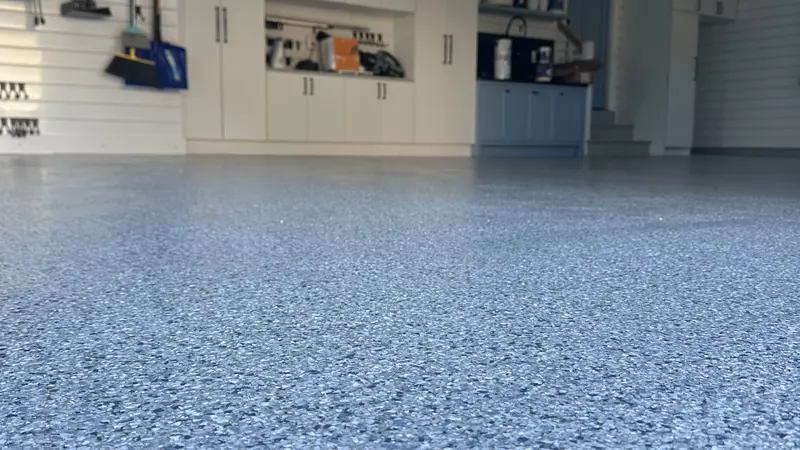
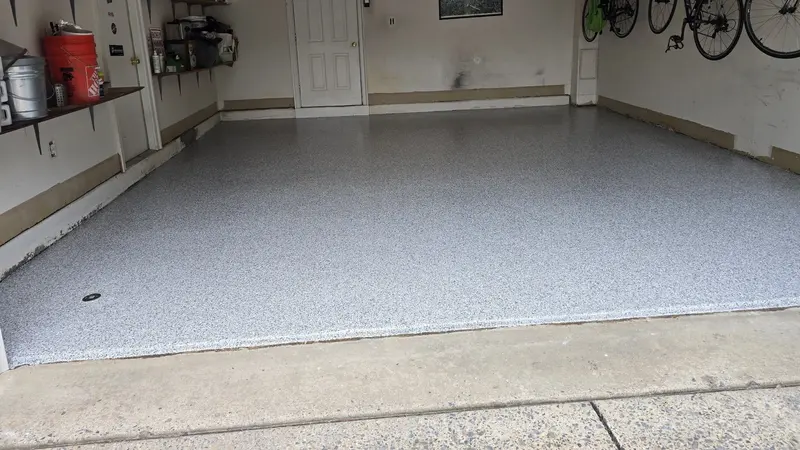
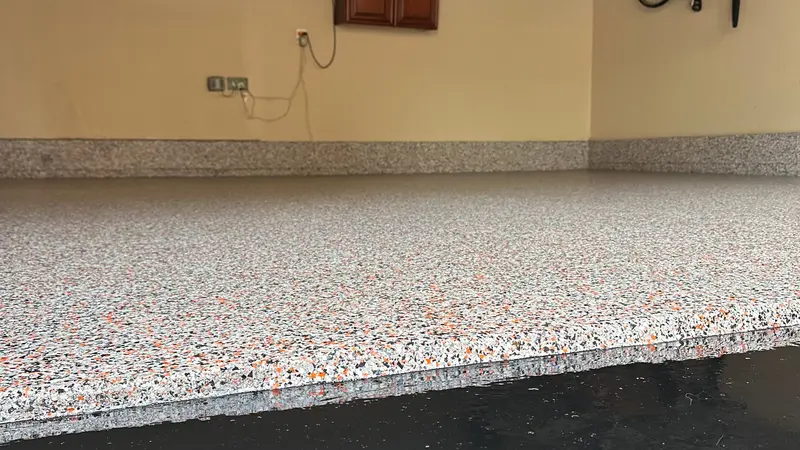
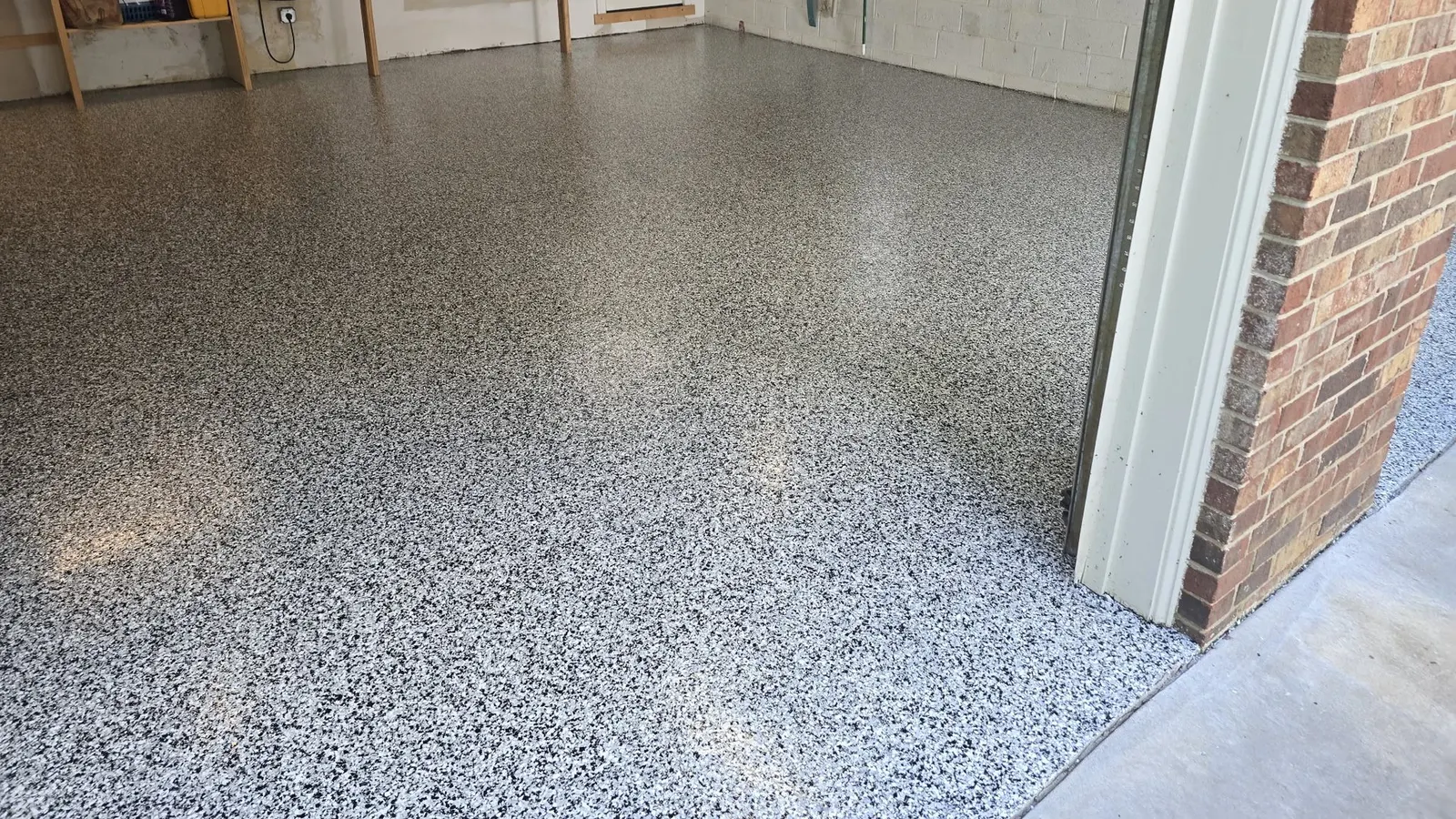
Not sure which look you want? Most of our customers choose a flake blend. Creekbed, Tidal Wave, and Gravel are three favorites. You can see them all on our flake color choices page.
Get it done before the salt trucks roll
We've been coating garage floors across Northern Virginia since 2014, from Leesburg and Ashburn to Fairfax, Arlington, and Alexandria. We're locally owned. Not a franchise, not a national chain.
If you want your floor protected before winter, call 703-936-9006 or request a free estimate online. You'll get an honest look at your floor and a clear quote. No pressure. No obligation.
Quick answers
The flake finish adds texture underfoot, which is one reason it's our most popular option. If traction is a priority for your household, tell us during the estimate and we'll go over the options.
Usually not. Grinding and repairing pitted or cracked concrete is a standard part of our prep. We'll look at the floor and tell you honestly what it needs.
Rinse or mop out the meltwater now and then. That's it. Nothing soaks in, so there's nothing to scrub out.