Latest Articles
Garage Floor Guides for Northern Virginia Homeowners
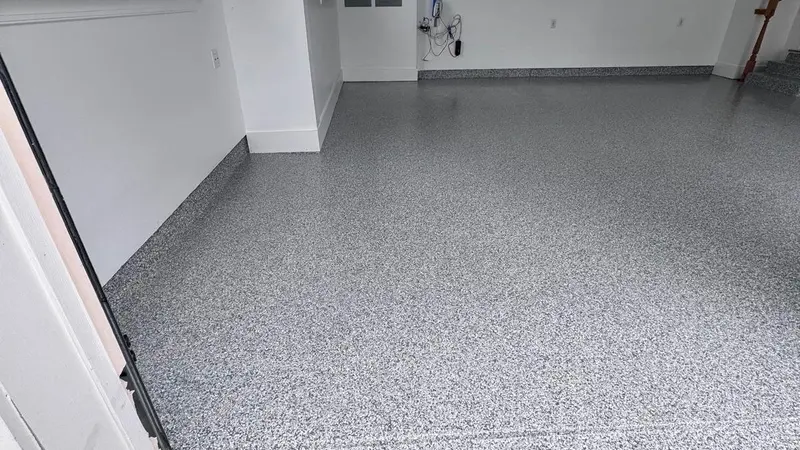
Vienna and Oakton garages: what we see most and how we fix it
Vienna and Oakton have two very different kinds of garage floors: older slabs that have taken fifty years of weather and oil, and newer infill builds whose concrete is barely broken in. Here's what each one needs before a coating goes down.
Read the article →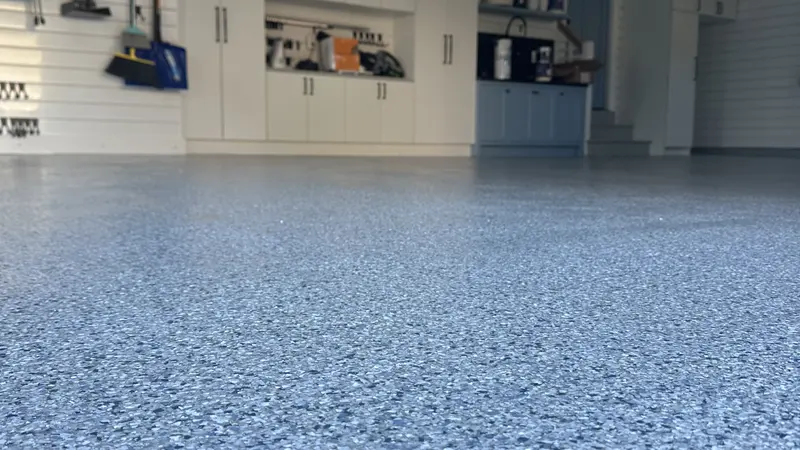
Diamond grinding vs. acid etching: how concrete should be prepped for a coating
Diamond grinding and acid etching are the two ways people open up concrete before coating it, and they are not equivalent. Here is what each one actually does to your slab, and why professional installers grind.
Read the article →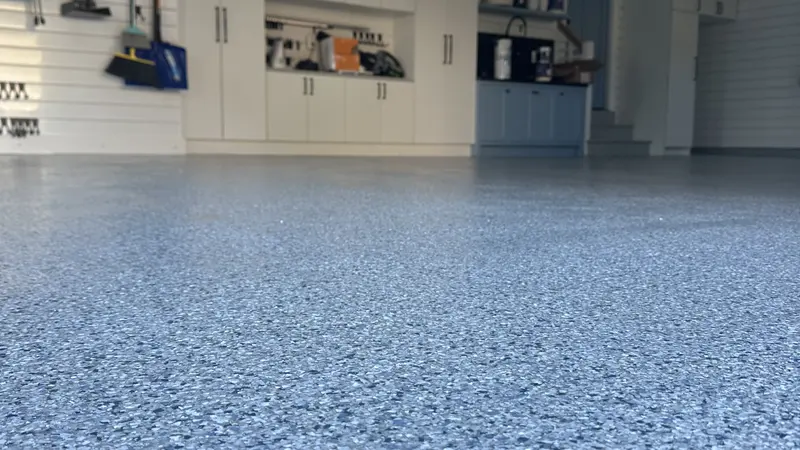
McLean garages: floors that match the rest of the house
In McLean, the kitchen, the baths and the basement usually get finished long before the garage does. Here is how a polyaspartic floor brings that last room up to the standard of the rest of the house.
Read the article →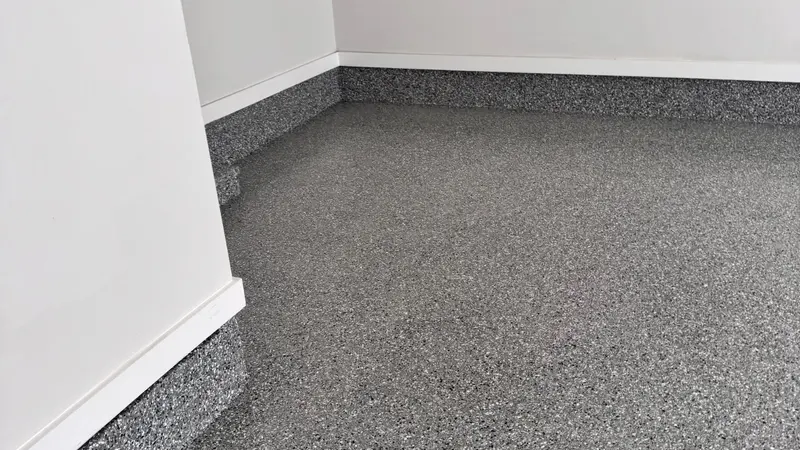
How to prepare your garage for winter in Northern Virginia
Road salt, freeze-thaw cycles and a car that drips slush all winter are hard on a garage floor. Here is what to clean, seal, store and fix before the first hard freeze in Northern Virginia.
Read the article →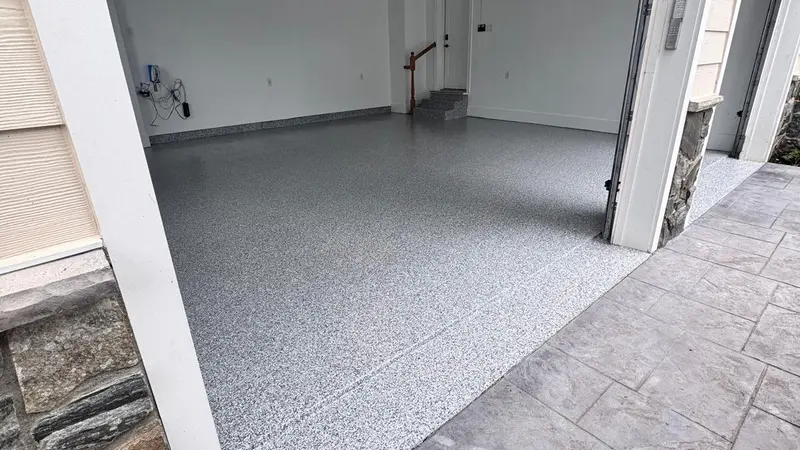
Solid color vs. flake: which garage floor finish fits how you use the space
Flake and solid color are both polyaspartic finishes, but they behave differently underfoot and under dirt. Here is how Northern Virginia homeowners decide between them based on how the garage actually gets used.
Read the article →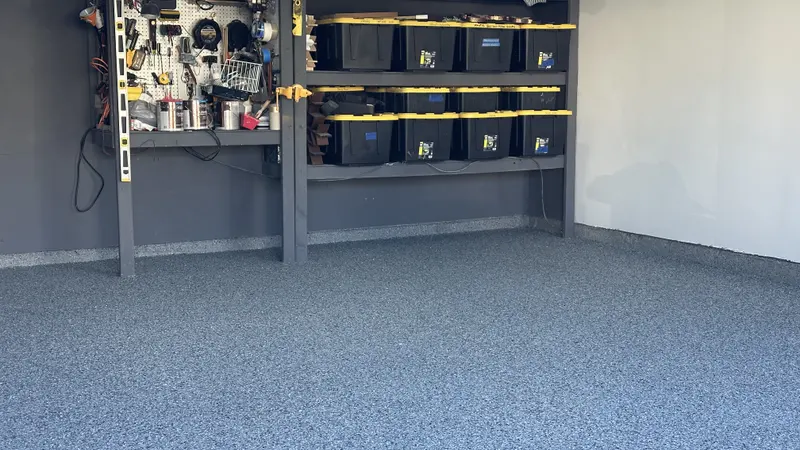
Garage floor coating in Fairfax: fixing decades-old concrete
Much of Fairfax County's housing stock is decades old, and so are the garage slabs under it. Here is how a 40-year-old concrete floor gets repaired and coated, and what a polyaspartic finish actually fixes.
Read the article →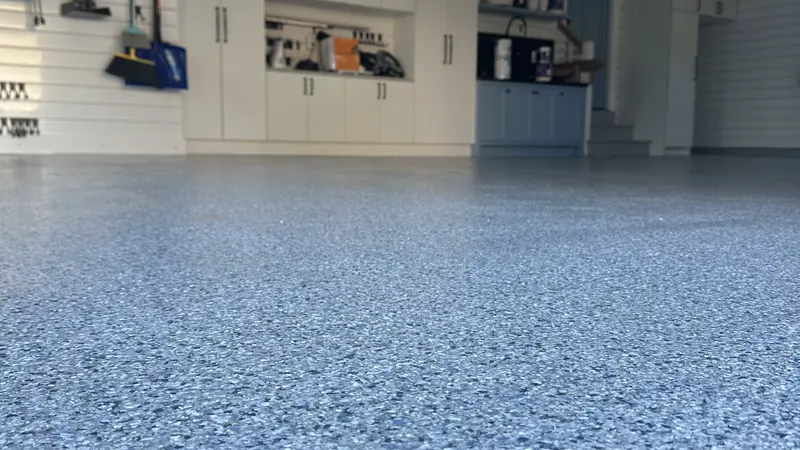
Moisture in a concrete slab: what it means for your garage floor coating
Every concrete slab holds some moisture, and a small amount never stops a coating from bonding. The problem is a slab that keeps pulling groundwater up from below, and here's how to tell which one you have.
Read the article →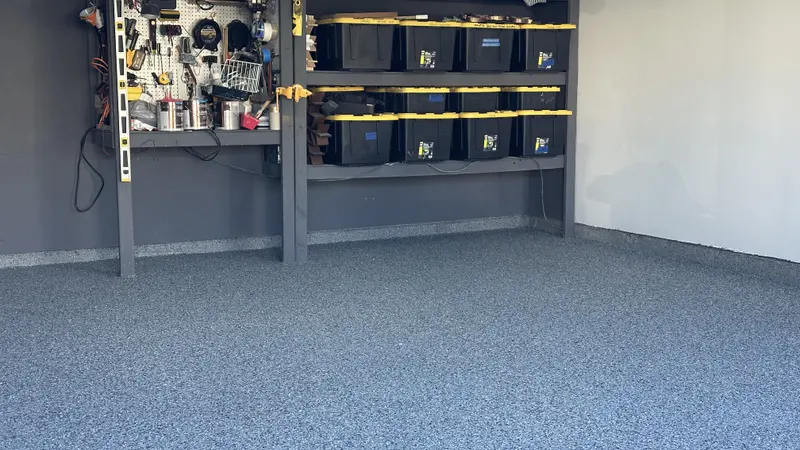
Can you coat a garage floor that has cracks and pitting?
Cracks and pitting are the normal starting condition for a garage floor, not a reason to skip coating it. Here's what gets repaired before the base coat goes down, what a coating will not fix, and how slab condition affects your price.
Read the article →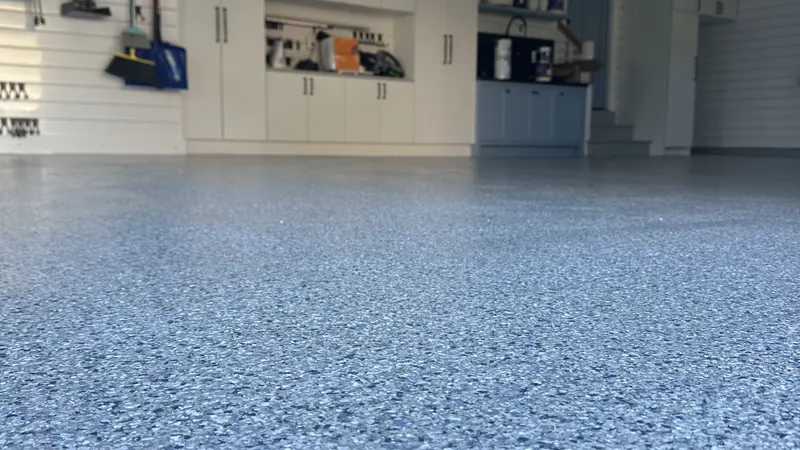
Building a home gym in the garage: why the floor comes first
Racks, mats and mirrors all sit on the same slab, and bare concrete is the weak link in most garage gyms. Here is how to get the floor right before the equipment arrives.
Read the article →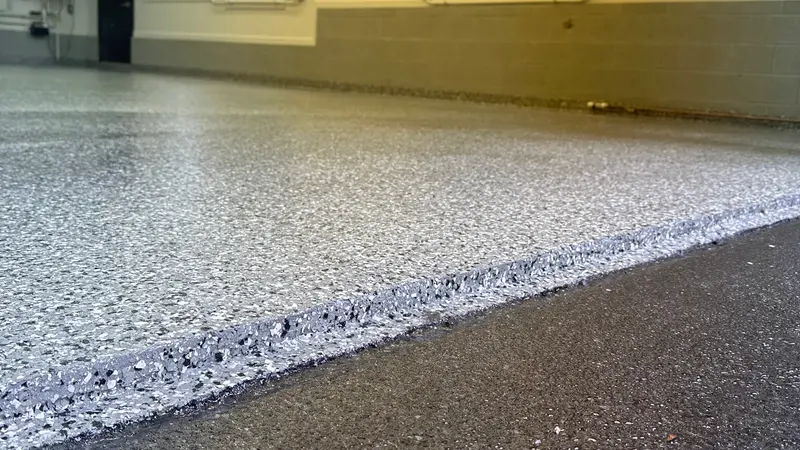
Garage floors in Leesburg: older slabs, newer builds and what each needs
Leesburg garages run from hand-troweled slabs poured decades ago to concrete that was placed last spring. Both can take a polyaspartic coating, but the prep, the repairs and the surprises are different.
Read the article →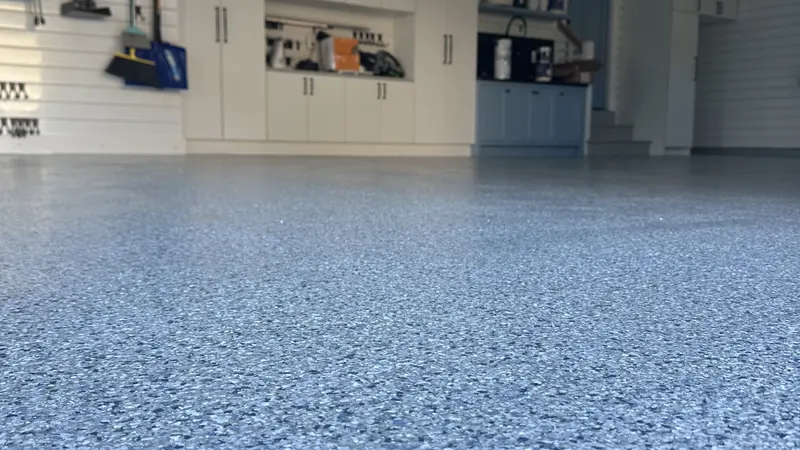
Choosing a flake color: Creekbed, Tidal Wave or Gravel?
Creekbed, Tidal Wave and Gravel are our three featured flake blends, and homeowners agonize over the choice more than any other part of the project. Here is how each one reads in a real garage, and what actually matters when you pick.
Read the article →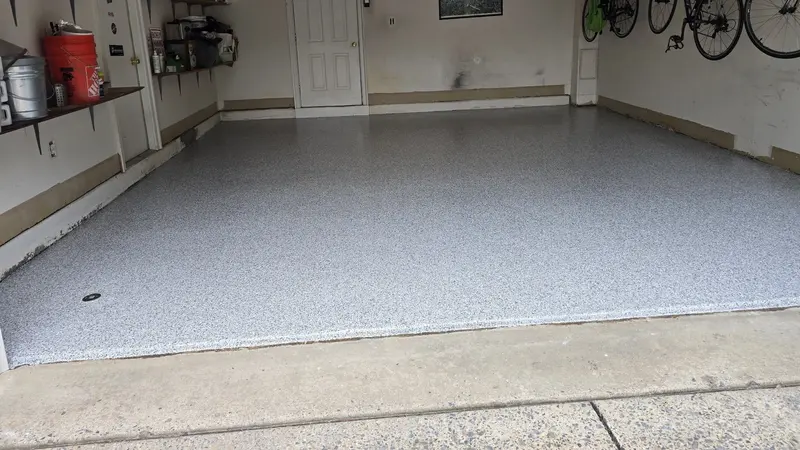
Garage floor coating in Ashburn: what Brambleton and Broadlands homeowners should know
Ashburn garages tend to have younger, cleaner concrete than older parts of Northern Virginia, which changes what a coating job looks like. Here is what Brambleton and Broadlands homeowners should know about cost, salt, moisture and timing.
Read the article →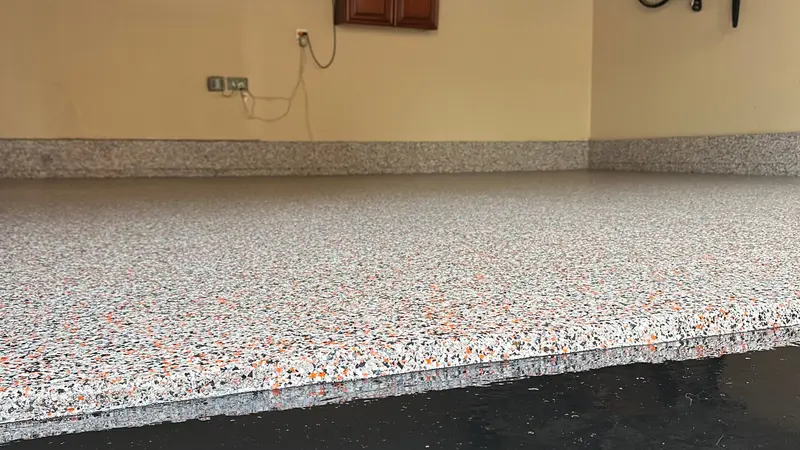
Why garage floor coatings peel, and how proper prep prevents it
Peeling is an adhesion failure, and it almost always traces back to how the concrete was prepared before the first coat went down. Here's what causes it in Northern Virginia garages and what proper prep actually looks like.
Read the article →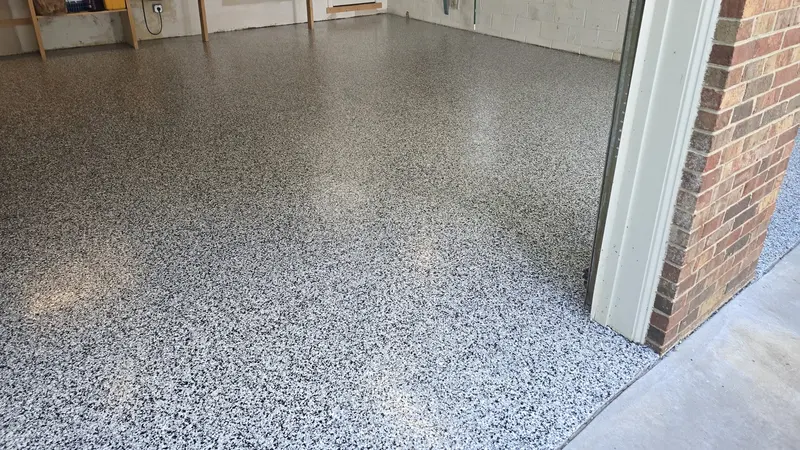
Why Fall Is the Best Time to Coat Your Garage Floor in Northern Virginia
Winter is when bare garage concrete takes its worst beating. Here is why fall is the last easy window to protect it, and what the job involves.
Read the article →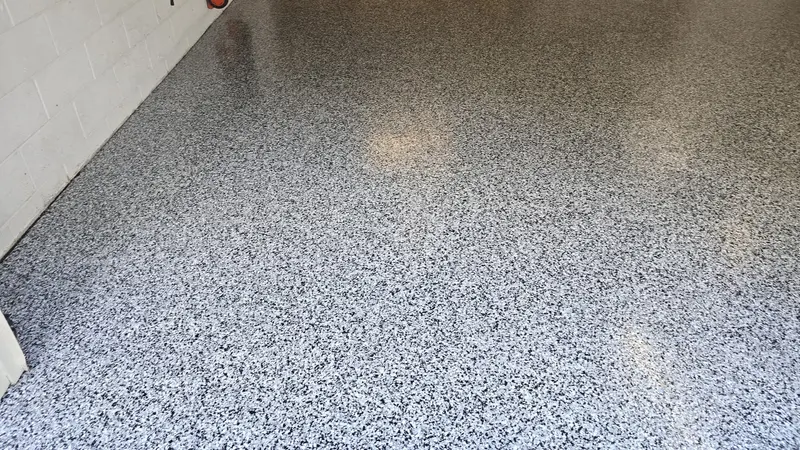
How much does garage floor coating cost in Northern Virginia?
A one-car garage runs $1,500 to $2,000 and a two-car garage runs $3,500 to $4,000 for a professionally installed polyaspartic coating. Here is what sits behind those numbers and what moves your quote inside the range.
Read the article →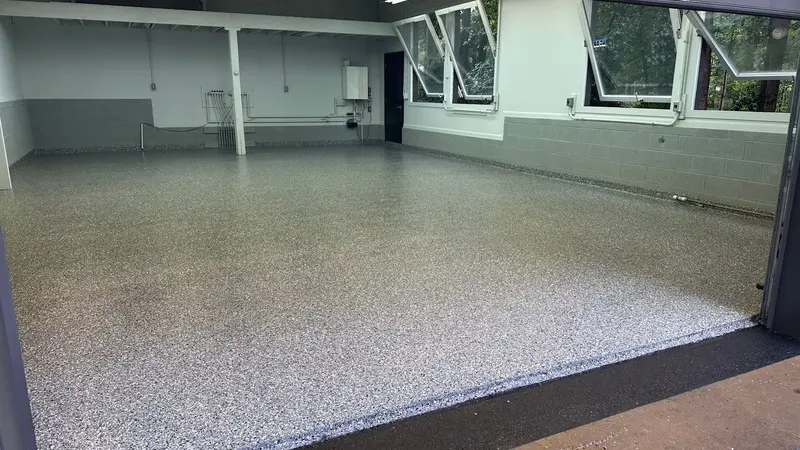
What happens on installation day? A step-by-step walkthrough
Installation day is one day, start to finish: grind, repair, base coat, flake, clear topcoat. Here is what each step actually looks like in your garage, and when the floor is ready for your car.
Read the article →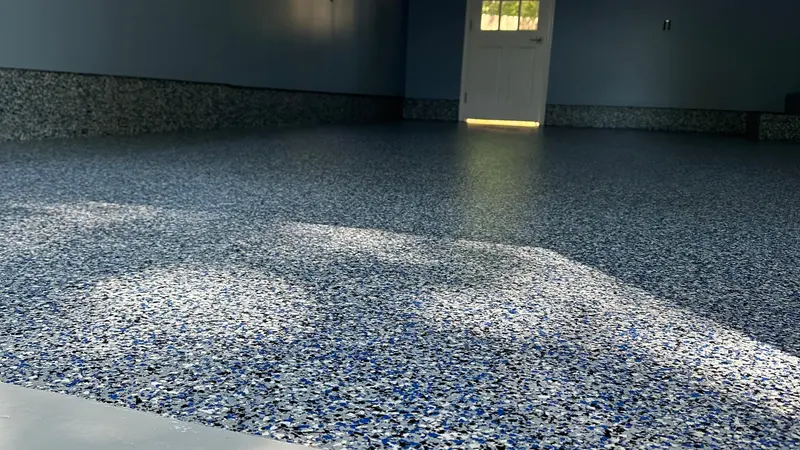
How to clean and maintain a polyaspartic garage floor
A polyaspartic garage floor needs a dust mop, warm water and a pH-neutral cleaner, and not much else. Here is the routine we give our Northern Virginia customers, including what to keep off the floor and when a fresh clear topcoat is worth it.
Read the article →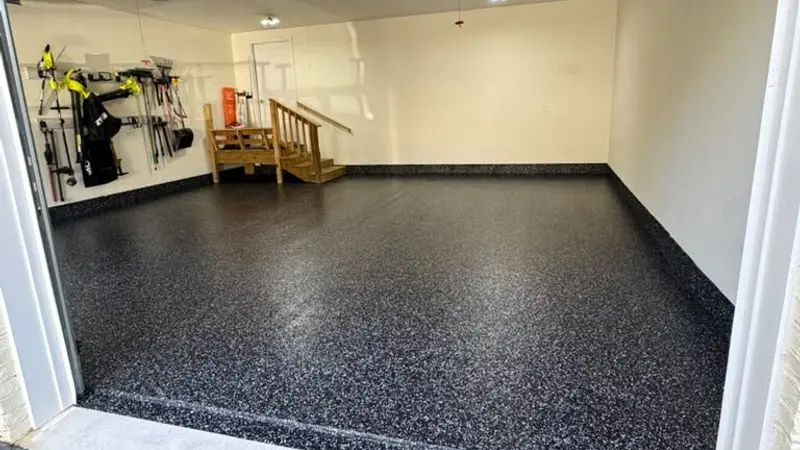
Why Northern Virginia homeowners are moving from epoxy to polyaspartic
Northern Virginia puts garage floors through humid summers, salted winters and sun pouring in the open door. Here is why homeowners who once chose epoxy are switching to polyaspartic, and what actually changes.
Read the article →