Most homeowners spend more time choosing a flake color than they spend choosing a coating. That is fine, because the color is the part you look at every day. The short version: Creekbed reads warm and earthy, Tidal Wave reads cool and blue-gray, and Gravel reads neutral and quiet. All three hide dirt far better than bare concrete, and all three are the same polyaspartic system underneath.
What follows is how each blend behaves in an actual Northern Virginia garage, under real lighting, with real mud on it.
What is a flake blend, and why does it hide dirt?
A flake floor is built in layers. We grind the concrete, repair cracks and pitting, roll a base coat, broadcast vinyl flake into the wet base until the floor is covered, then seal everything under a clear polyaspartic topcoat. The flake is not a sticker or a pattern printed on top. It is thousands of small chips of color suspended in the system.
That matters visually because your eye reads a flake floor as texture rather than as a flat surface. A single solid color shows every tire mark, every drip of bar oil off a chainsaw, every gray streak of winter salt. A blend of three or four flake colors breaks up the surface so small debris disappears into it. In September, when the first oak leaves and pine needles start blowing into an open garage in Reston or Vienna, you notice this immediately. The floor looks clean when it is mostly clean, instead of looking dirty when it is mostly clean.
The flake also adds a fine, consistent texture underfoot, which helps when you walk in with wet shoes.
What do Creekbed, Tidal Wave and Gravel actually look like?
Names only get you so far. Here is the practical read on each of our three featured blends. You can see all three on our flake color choices page, and we bring physical samples to the estimate so you can hold them in your own garage.
Creekbed
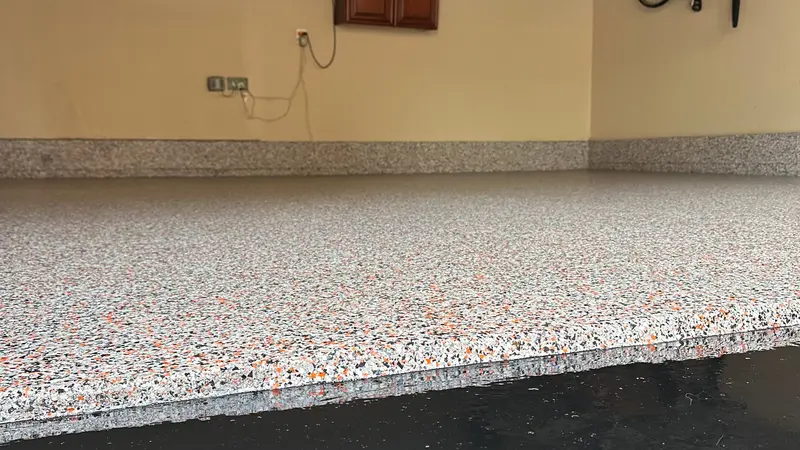
Creekbed is the warm option. It leans toward browns, tans and earth tones, the way a dry streambed in Great Falls looks after the water drops in late summer. It is the most forgiving blend we install for red clay. If your driveway backs onto a wooded lot, if the kids play in the yard, if you tow a boat or haul mulch, the tan and brown chips absorb Virginia clay dust the way nothing else does.
Creekbed also plays well with beige or tan walls and with wood-tone storage cabinets. If your garage interior is still builder drywall and you plan to leave it that way, Creekbed softens the room instead of fighting it.
Tidal Wave
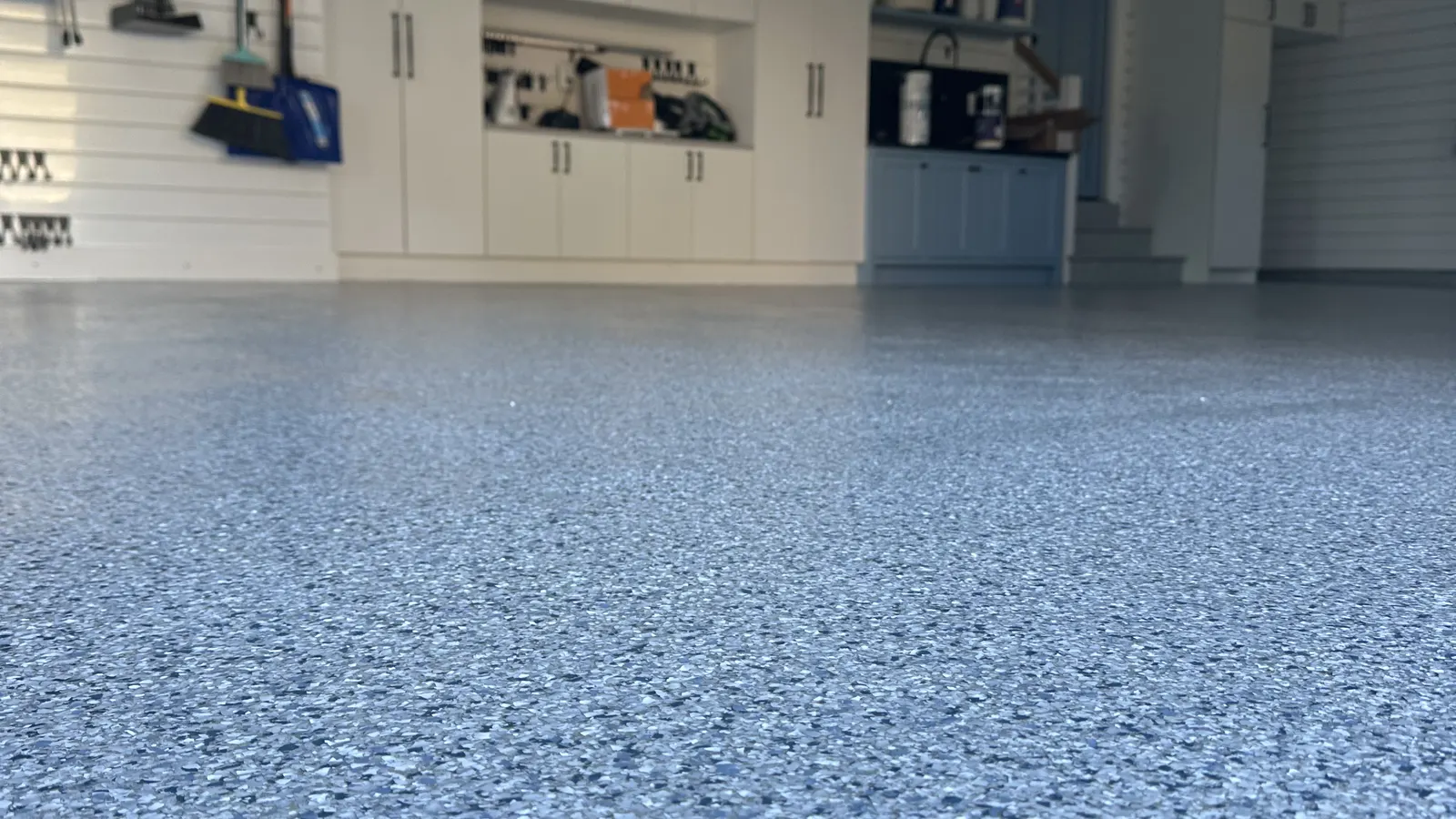
Tidal Wave is the cool, higher-contrast option, built on blues and grays. It is the blend people pick when they want the garage to look deliberate rather than utilitarian. It photographs well, and it sits nicely under LED shop lights, which already throw a cool white.
Tidal Wave has more visual movement than the other two. In a bright, finished garage with white walls and a couple of clean cars in it, that movement is the point. In a small, dim one-car townhome garage packed with bikes and bins, it can feel busier than you expected. That is not a reason to avoid it, just a reason to look at the sample in the actual space.
Gravel
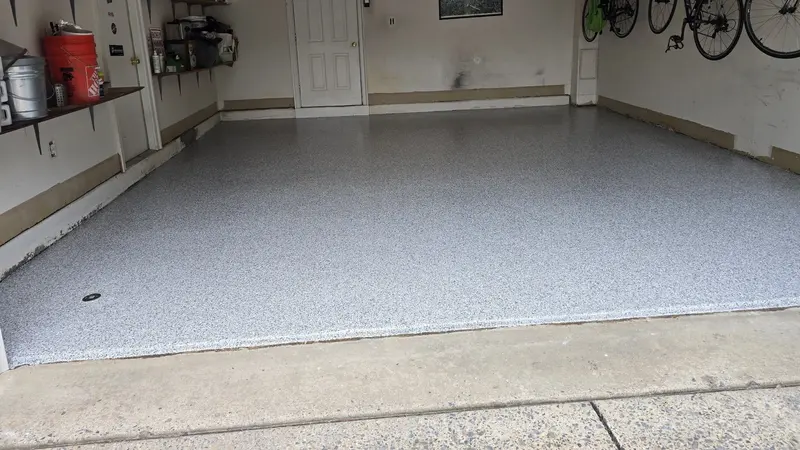
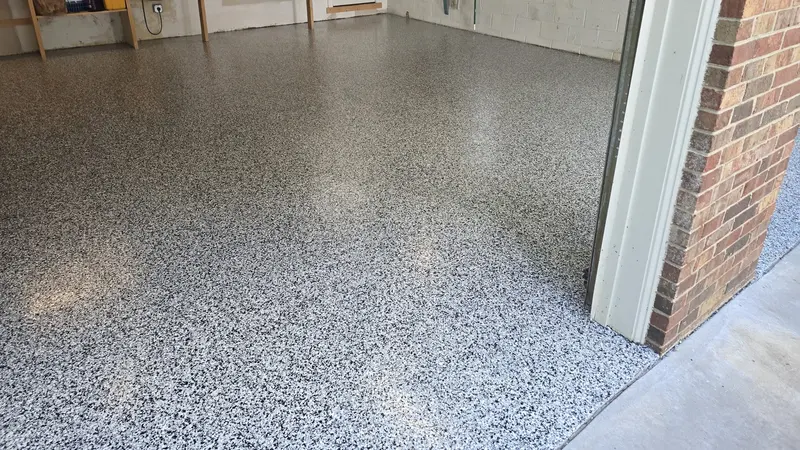
Gravel is the neutral. Grays and blacks and whites, close to the palette of the concrete you already have, just far more even and far more finished. It is the safest choice in the honest sense of the word: it goes with any wall color, any cabinet, any car, and it will still look right if you repaint the garage in five years.
Gravel is also the blend that disappears most gracefully under everyday grime between cleanings. Tire marks and gray road film do not stand out against gray and black chips. If you park daily and clean occasionally, that is worth something.
Which flake color hides Northern Virginia dirt the best?
It depends on which dirt you get most of. Our soil is heavy clay, and the dust it leaves is orange-red. Warmer blends like Creekbed absorb that color instead of contrasting with it. From December through March, the dirt changes character: road salt and brine dry to a chalky white or pale gray film, and that shows up worse against dark, warm floors than against a mixed gray blend like Gravel.
If you want the honest tradeoff:
- Mostly clay, mulch and yard debris: Creekbed.
- Mostly winter salt and road film: Gravel.
- A finished, well-lit garage where looks come first: Tidal Wave.
Any of the three cleans up with a dust mop and a hose or a mop bucket. None of them are porous, so the dirt sits on top instead of soaking in. We wrote a full guide on cleaning and maintaining a polyaspartic floor if you want the specifics.
How much does garage lighting change the color?
More than most people expect. A two-car garage in Ashburn Farm with two old 4-foot fluorescent fixtures and a single window will make every blend look a shade darker and flatter than the sample does in daylight. Swap those for 5000K LED shop lights and the same floor gets brighter and cooler, which flatters Tidal Wave and Gravel and can make Creekbed look slightly grayer than you pictured.
Two things to do before you commit. First, look at the physical sample on the floor of your own garage, with the door closed and the lights on, not on your kitchen counter. Second, decide now whether you are upgrading the lighting. If new LEDs are on the list, choose for the lighting you are going to have.
Should the floor match the house or the cars?
Neither, really. Match it to the walls and to the storage you plan to install, because those are the surfaces your eye takes in at the same time as the floor. Cars come and go. Drywall stays.
A few patterns hold up across the townhome garages in Brambleton and the three-car bays in Lansdowne and River Creek. White or light gray walls with black cabinets make Gravel look intentional and make Tidal Wave look sharp. Tan or greige walls pair with Creekbed. If you are running the coating out onto a basement floor or a patio as part of the same project, pick the blend that works in the harder room and carry it through, since garages tolerate more contrast than living spaces do.
How do I actually decide?
Stop deciding from photographs. Screens shift color, and no picture shows you how a blend behaves when your own garage light hits it. We bring physical samples of all three blends to the free 20-minute estimate, set them on your concrete, and give you a firm price for the finish you land on. Homeowners change their mind at that stage more often than not, and that is exactly what the samples are for.
Color is also the last thing that matters for how long the floor lasts. Prep is the first. If you are still weighing systems, read why Northern Virginia homeowners are moving from epoxy to polyaspartic before you pick chips. Late September is a good window for this work: the slab is dry from summer, and the floor will be cured and ready long before the first salt truck runs.
See the samples in your own garage
We install polyaspartic floors across Loudoun and Fairfax counties, from Leesburg to Fairfax. Call or text 703-936-9006, or use the form on our contact page, and we will bring Creekbed, Tidal Wave and Gravel to you along with a firm price. No pressure. No obligation.
Quick answers
No. The polyaspartic topcoat is UV stable, so it will not yellow the way some clear coatings do, even in a garage with a lot of afternoon sun through the open door. The flake color you choose is the color you keep.
It can, especially a high-contrast blend in a dim space. In a small townhome garage we usually suggest setting the sample on the floor with the door closed and the lights on before you commit, since a quieter blend like Gravel often reads better in tight, low-light bays.
Yes. We install the same polyaspartic system on basement floors, patios and commercial floors, so you can carry one blend through the whole project. Just pick the color that works in the finished living space first, because garages tolerate more contrast than basements do.