Vienna and Oakton garages fall into two camps, and they need different things. The older ones sit under houses built from the 1950s through the 1970s, with slabs that have taken decades of oil, salt and freeze-thaw. The newer ones belong to infill builds and 1990s colonials, where the concrete looks fine but has never been prepped for anything. Both can be coated in a single day with a polyaspartic system, but what happens in the first two hours of that day is completely different.
Why do Vienna garages vary so much from street to street?
Drive five minutes in any direction from Maple Avenue and the housing stock changes. The streets closest to the town center are full of ramblers and split-levels from the 1950s and 60s, many with one-car garages, some with detached garages or carports that were enclosed later. Push out toward Oakton and you get 1980s and 90s colonials with two-car attached garages and deeper driveways. Then there are the infill lots, where an older house came down and a new one went up with a three-car garage and a slab poured within the last few years.
That matters because a coating is only as good as the concrete it bonds to. A 1962 slab and a 2022 slab are both concrete, but they are not the same surface. We look at them differently before we quote them, which is one reason the free in-home estimate in Vienna happens on the floor itself rather than over the phone.
What do we find on older Vienna slabs?
The most common thing we see on a sixty-year-old garage floor is surface deterioration rather than structural failure. The slab is still sound. The top layer is not. You see pitting where the cement paste has worn away and the aggregate is exposed, a chalky dust that comes back no matter how often you sweep, and dark staining under where the car has sat since the Reagan administration.
Cracks are nearly universal and almost always cosmetic. Northern Virginia's clay soil swells when it is wet and shrinks when it dries, and garage slabs are usually poured thinner than a basement floor, so hairline and quarter-inch cracks are normal. We grind the whole floor with diamond tooling, chase the cracks open, fill them, and skim the pitted areas so the surface is uniform before any coating goes down. If you want the detail on why grinding beats an acid wash, we wrote that up in diamond grinding vs. acid etching.
The other thing older garages bring is paint. A fair number of Vienna homeowners rolled out a big-box epoxy kit sometime in the last twenty years, and what is left is a patchwork of peeling film around the tire tracks. That comes off in the grind. It adds time, not drama. If you are curious why it failed in the first place, the short version is in why garage floor coatings peel.
Does a newer Oakton or infill slab really need prep?
Yes, and this surprises people. A new slab is usually troweled smooth and sealed with a curing compound, which makes it look clean and makes it a poor surface for anything to bond to. A coating rolled onto a slick, sealed slab is sitting on top of it, not locked into it. Ask anyone whose garage floor started peeling in sheets along the tire path.
We grind new concrete for the same reason we grind old concrete: to open the pores and give the base coat something mechanical to grab. On a newer floor the grind is faster and cleaner, and there is far less crack repair, but it is not optional. Newer slabs also tend to show tire marks and road grit more obviously, because there is nothing in the surface to hide it. That is part of why most homeowners with new builds choose a flake finish over a solid color, which we compare in solid color vs. flake.
How much damage does road salt actually do here?
Enough to matter. Fairfax County salts Route 123, Chain Bridge Road and Nutley Street hard, and every trip out in January brings a slush of brine and grit into your garage that melts off the car and pools on the slab. Salt itself does not dissolve concrete. What it does is drive the freeze-thaw cycle, drawing moisture into the top layer of the slab and expanding it when the temperature drops back below freezing. Do that for thirty winters on an uncoated, unsealed floor and you get the flaking and pitting we described above.
A polyaspartic coating puts a continuous, non-porous surface between the brine and the concrete. The salt sits on top, you hose or mop it off, and the slab underneath never absorbs it. Polyaspartic also resists road salt and automotive chemicals directly, so the coating is not quietly degrading while it protects the floor. If winter prep is on your list anyway, getting the garage ready for a Northern Virginia winter covers the rest.
Can you install in late fall or winter?
We can. Polyaspartic cures in temperatures down to 30°F, which is why we keep installing through December and January in Vienna while epoxy work largely stops. Epoxy generally needs 50°F or warmer to cure properly, and an unheated attached garage in Oakton does not hold 50°F in January without help.
The install itself is one day: grind the concrete, repair cracks and pitting, roll the base coat, broadcast the flake, then the clear topcoat. You can walk on the floor the same day. Vehicles stay off for 24 hours. The one thing we need from you is a completely empty garage on install day, which for most Vienna homeowners means a weekend of moving bins into the driveway or the dining room. The full sequence is in our installation day walkthrough.
What finishes do Vienna homeowners usually pick?
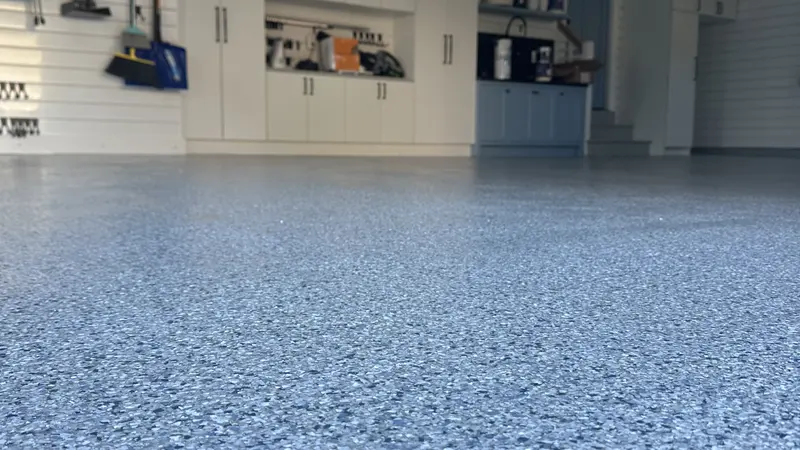
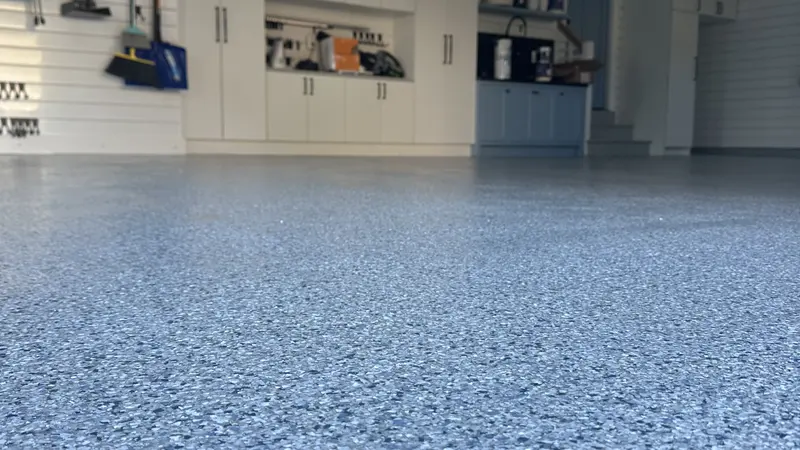
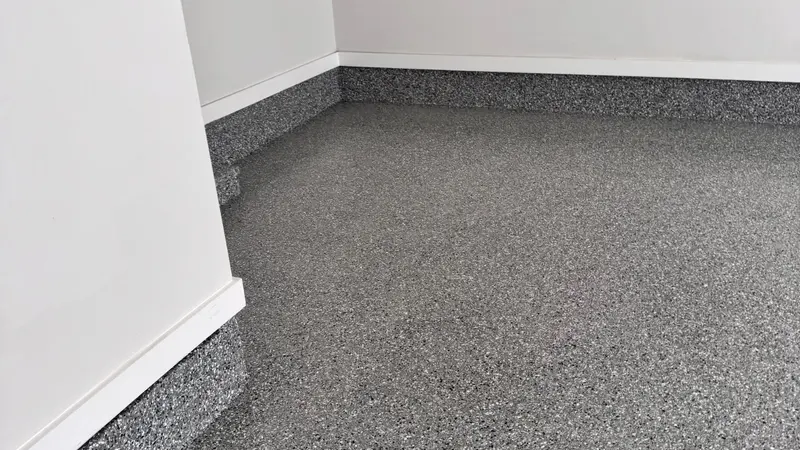
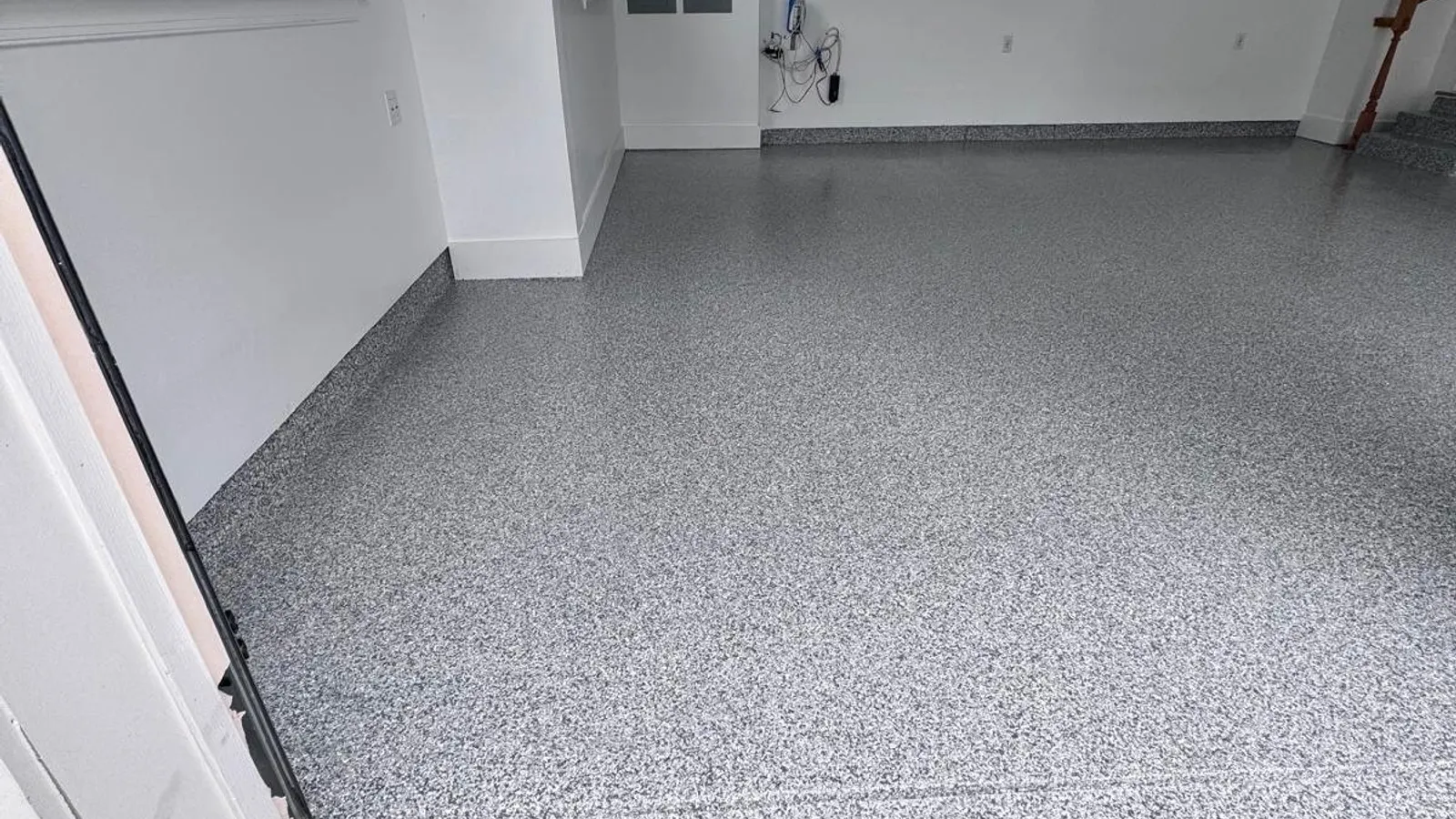
Flake blends, overwhelmingly. The flake adds a bit of texture underfoot, which helps when the car drips a winter's worth of slush, and it breaks up the surface visually so dirt and tire grit do not read as dirt. Creekbed is the warm-neutral choice and tends to go with the brick and tan siding common around Oakton. Gravel is the cooler gray that suits newer builds and white trim. Tidal Wave is the blue-gray blend for homeowners who want the garage to look deliberate rather than neutral. You can see them side by side on the flake color page, and we bring physical samples to the estimate so you can hold them against your own walls and lighting.
Metallic, marbled, quartz and solid colors are all available. They come up most often in garages doing double duty as a gym or a workshop, which is common in the bigger infill garages around Vienna and over toward McLean.
What does it cost in Vienna?
A one-car garage of about 200 square feet runs $1,500 to $2,000. A two-car garage in the 400 to 500 square foot range runs $3,500 to $4,000. Where you land inside those ranges depends on the condition of the concrete and the finish you choose, which is exactly why we measure and look at the slab before giving you a number. The floor lasts 15 to 20 years or more, a fresh clear topcoat every 5 to 7 years keeps it looking new, and it is backed by a lifetime warranty. More on the math in garage floor coating cost in Northern Virginia.
Want a firm number for your garage?
We are a locally owned company based in Leesburg and we have been coating floors across Fairfax and Loudoun since 2014. The estimate takes about 20 minutes, includes physical color samples, and ends with a firm price. Call or text 703-936-9006 or send us a note through the contact form. No pressure. No obligation.
Quick answers
Yes. Detached garages are common on the older streets in Vienna and they coat the same way as an attached garage, with the same one-day polyaspartic install. Temperature matters more in an unheated detached space, but polyaspartic cures down to 30°F, so winter installs are still on the table.
Usually not. Most cracks in Northern Virginia garage slabs are shrinkage or soil movement cracks, not structural failures, and we open, fill and grind them flat as part of the prep. We will tell you at the estimate if we see something that needs a different approach before coating.
Yes. Polyaspartic is an industrial coating built to handle impact and point loads, and it resists hot tire pickup from a car parked straight off the Beltway. Bring up any lift or heavy equipment plans at the estimate so we can talk through the layout.