Getting a Northern Virginia garage ready for winter comes down to four things: clear the floor, deal with water and salt, protect the concrete before it freezes, and set up the space so you can actually use it in January. Most of that is a Saturday's work. The part that matters longest is the floor, because bare concrete is the one surface in the garage that winter quietly destroys.
Here is the order we would do it in, and why each step matters in this climate specifically.
Why does winter hit a garage floor harder than the rest of the house?
Northern Virginia does not get a steady deep freeze. We get a hard night, a 50-degree afternoon, rain, then another hard night. VDOT and county crews salt and brine the roads ahead of every one of those swings, from the Dulles Greenway down to I-395.
Your car drives through that slurry and carries it home. It drips off the wheel wells and rocker panels onto the garage slab and sits there in a puddle of melted snow. Bare concrete is porous, so the salt solution soaks in. When the temperature drops overnight, the water in those pores freezes and expands. Do that fifty times a winter and you get the damage most homeowners recognize: a chalky white film, flaking at the surface, and shallow pits that get wider every year.
Concrete professionals call that spalling. It is not a cosmetic problem you can scrub away, because the surface layer has physically come apart. Once it starts, each winter makes it worse. That is the reason we push floor work before winter rather than after.
What should I clean off the floor before the cold sets in?
Start with a full sweep and a degreaser on any oil spots. Oil that sits all winter under a cold car bonds into the concrete and becomes much harder to remove in spring, and it is one of the contaminants that causes problems if you ever coat the floor later.
If you have had a car in the garage through a previous winter, rinse the slab with a hose on a mild day and let it dry fully. You are trying to flush out the salt that soaked in last year before it sits through another freeze. This is not a permanent fix. It just slows the damage on bare concrete.
If your floor is already coated, winter cleaning is much simpler: a dust mop, then a wet mop with warm water when the salt film builds up. We walk through the full routine in our guide to cleaning and maintaining a polyaspartic garage floor.
Where is the water actually coming from?
Three places, and they need different answers.
- Off the car. Snowmelt and brine dripping off the vehicle. This is the big one, and it is the hardest on bare slab.
- Under the door. Rain and meltwater running down the driveway apron and under a worn garage door seal. Most door bottom seals in this area are shot after eight or ten years. Replacing one is an inexpensive afternoon job and it stops a surprising amount of water.
- Up through the slab. Northern Virginia clay holds water, and that water moves as vapor up through concrete. If you see damp patches in the middle of the floor with no obvious source, that is probably what you are looking at. We cover what it means for coating in this post on slab moisture.
Fix the door seal and grade issues first. They are cheap and they pay off immediately.
What should come off the floor and onto the wall?
Anything stored directly on a concrete floor in winter will get damp. Cardboard boxes wick moisture from the slab. Bags of fertilizer, pet food and grass seed draw it too. Metal tools left on concrete will show surface rust by February.
Get the following up off the ground on shelving, hooks or a rack:
- Cardboard storage boxes and anything paper
- Lawn and garden chemicals, which also do not like freeze cycles
- Power tools, hand tools and anything with exposed steel
- Camping gear, sports equipment and holiday decorations
While things are off the floor, this is the natural moment to look at the floor itself. Clearing the garage is most of the work of getting a coating installed anyway, so if you were already considering it, you have done the hard part. The slab must be completely clear on install day regardless.
Should I get the floor coated before winter or wait until spring?
You do not need to wait. Our polyaspartic coating can be installed in temperatures down to 30°F, which covers most working days in a Loudoun or Fairfax County winter. Epoxy generally needs 50°F or warmer to cure properly, which is why a lot of coating work in this area stops in November and does not start again until April.
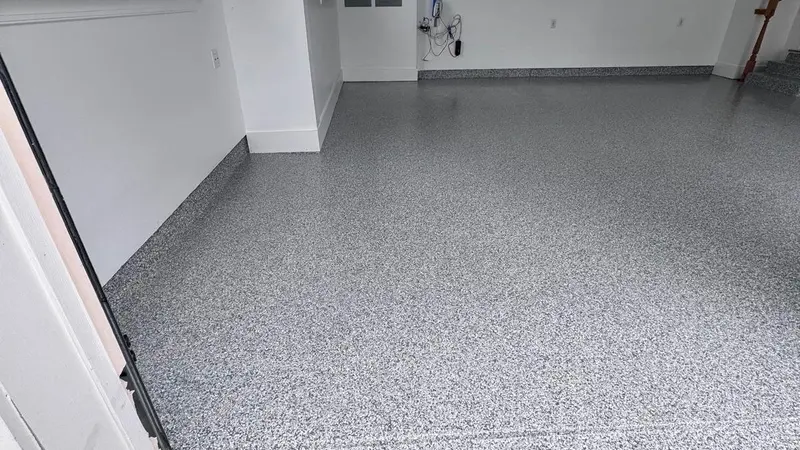
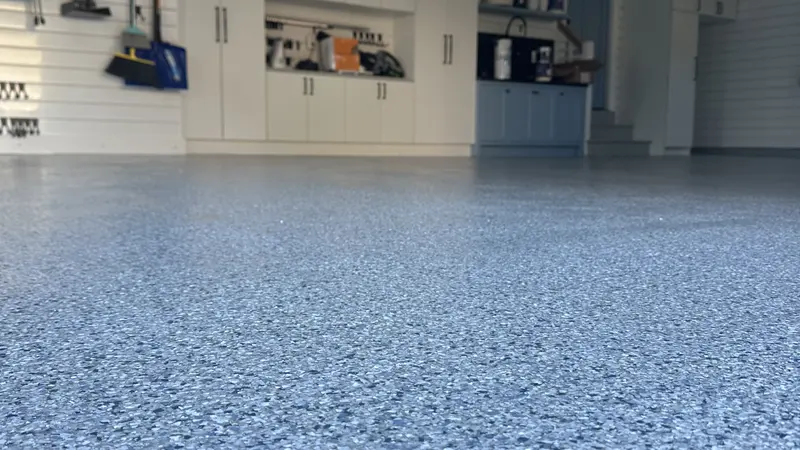
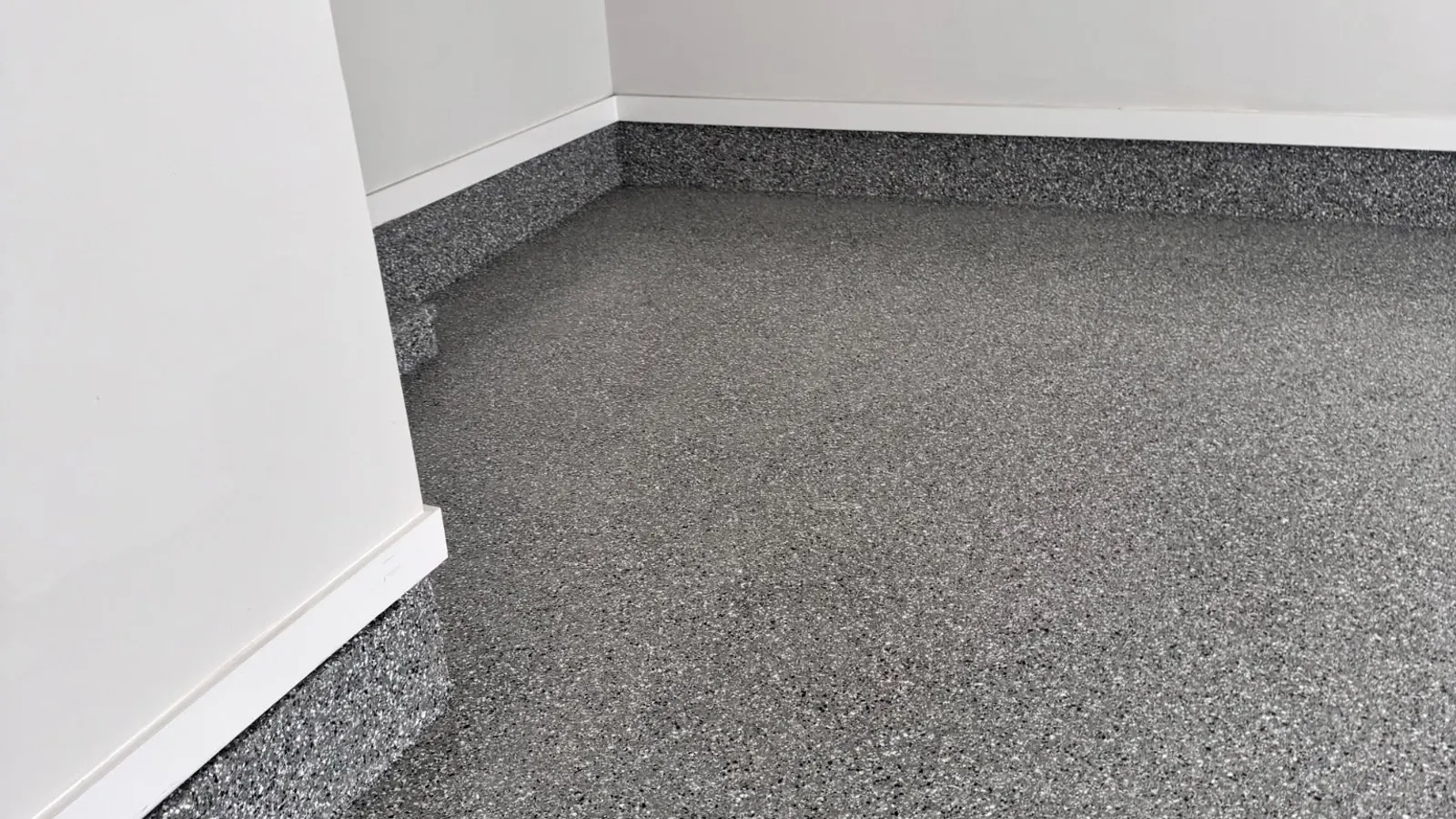
The practical argument for doing it now is the salt. A coated floor does not absorb brine. The salt sits on the surface as a white film, and you mop it off. Bare concrete absorbs it and carries it into every freeze-thaw cycle for the next four months. Each winter you wait is a winter of damage you will pay to repair later.
If your slab already has cracks or pitting, that is not a reason to postpone. Crack and pit repair is part of the install, which we explain in our post on coating a cracked garage floor. Older slabs around Leesburg, Vienna and Great Falls often need more repair work than a newer build in Brambleton or Broadlands, and that is reflected in the estimate rather than being a dealbreaker.
What does the install itself involve in cold weather?
The process does not change: we grind the concrete down to a clean profile, repair cracks and pitting, roll a base coat, broadcast flake across the full floor, then seal it with a clear topcoat. It is a one-day install. You can walk on the floor the same day. Wait 24 hours before you park a vehicle on it.
The one thing to plan around in winter is where your cars go for that 24-hour window. For a two-car garage in a neighborhood with a driveway, that is easy. For a townhome in Cascades or Kingstowne with limited parking, it is worth thinking about before you book. The step-by-step walkthrough of installation day covers what the day actually looks like.
On finish: flake blends are the most popular choice and they earn it in winter. The texture gives you grip when you step out of a car with wet boots, and the color variation hides the salt dust and road grit that build up between cleanings. Creekbed, Tidal Wave and Gravel are the three blends we show most often, and you can see them on our flake color page or in person at the estimate.
What does it cost to do the floor?
A one-car garage, roughly 200 square feet, runs $1,500 to $2,000. A two-car garage at 400 to 500 square feet runs $3,500 to $4,000. The final number depends on the condition of your concrete and the finish you pick, which is why we measure and quote in person rather than over the phone. More detail is in our cost guide for Northern Virginia.
Get a firm price before the first hard freeze
We will come out for a free 20-minute estimate, bring physical color samples, look at your actual slab and give you a firm price on the spot. Call or text 703-936-9006, or send us a note through the contact page. No pressure. No obligation.
Quick answers
Yes. A polyaspartic coating resists road salt, so the brine your car tracks in sits on the surface instead of soaking into the concrete. Mop it off with warm water when the white film builds up, and it will not harm the floor.
The flake itself adds real surface texture, which is one reason flake blends are the most popular choice in this climate. If you want more grip than the standard finish gives, mention it at the estimate and we will talk through the options.
It is not required. Our polyaspartic coating can be installed in temperatures down to 30°F, which covers most winter working days in Loudoun and Fairfax counties. We will confirm conditions when we schedule.