A polyaspartic garage floor is about as low-maintenance as a floor gets. Dust mop or blow it out when it looks dusty, wash it with warm water and a pH-neutral cleaner a few times a year, and wipe up spills when you notice them. That is the whole routine. The finish is a cured industrial coating, not a wax or a penetrating sealer, so there is nothing to strip, buff or reapply year to year.
Where people get into trouble is with the extras: harsh degreasers, scrubbing pads, and letting winter road salt sit on the surface for four months. Below is the routine we hand to customers after an install, and the reasoning behind each part of it.
What does the weekly routine look like?
Most weeks, nothing more than a dust mop, a soft push broom or a leaf blower. Northern Virginia garages collect a specific kind of grit: pollen in spring, fine clay dust tracked in from yards and construction sites, and sand and salt residue from November through March. That grit is the main thing that dulls a coating over time, because it gets ground under tires and shoe soles.
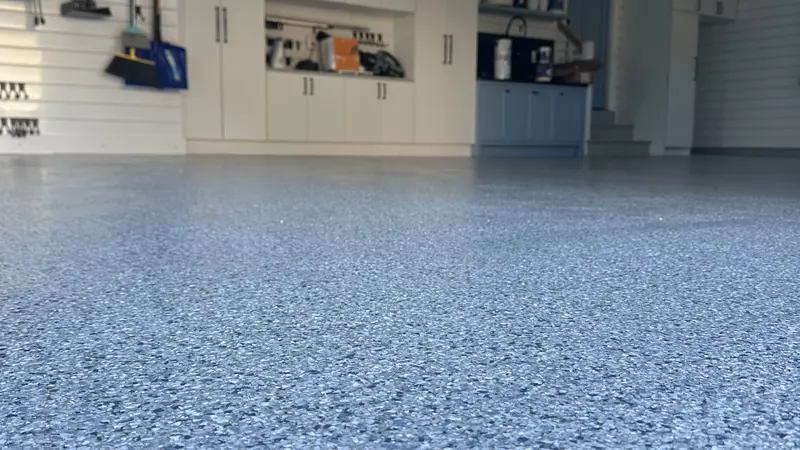
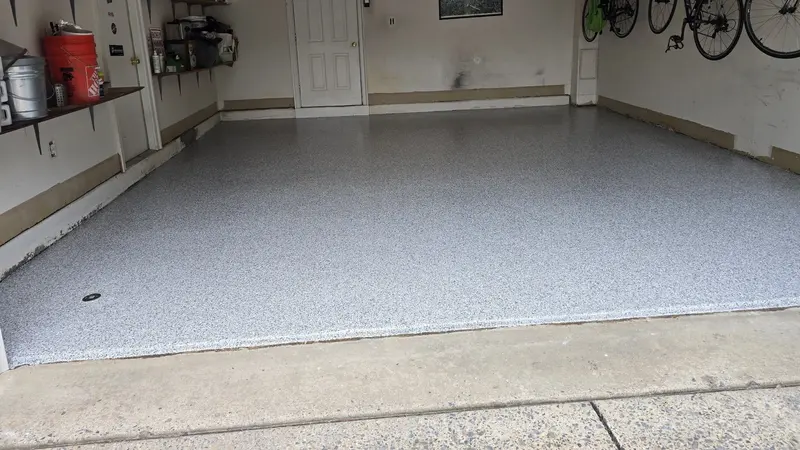
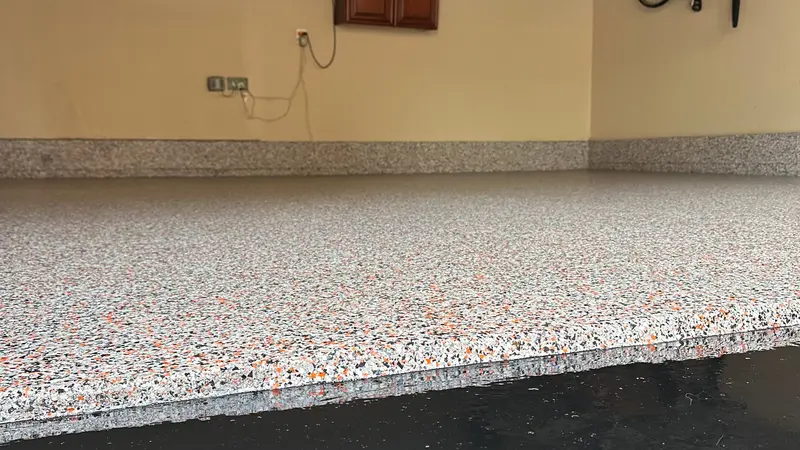
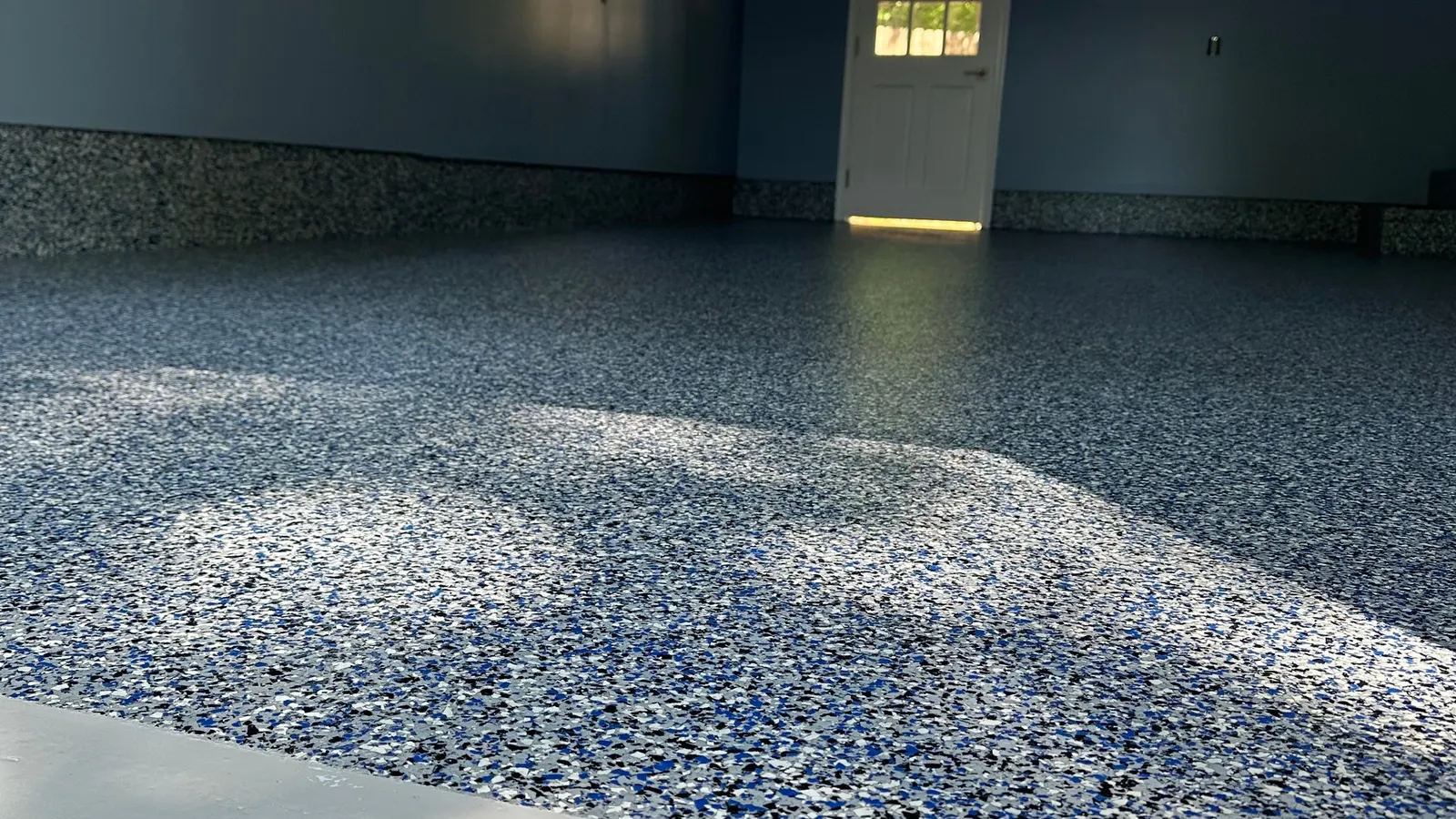
Moving it off the floor once a week takes about two minutes. If you have a flake finish like Creekbed, Tidal Wave or Gravel, you will notice the texture holds a little of that dust in the low spots between flakes. That texture is doing its job. It gives you traction when the floor is wet and it keeps ordinary dirt from reading as dirt from across the garage. A dust mop pulls most of it, and a wet wash gets the rest.
How do you actually wash it?
Two or three times a year, or any time it looks grimy, give the whole floor a wet clean:
- Clear the floor of anything light enough to move and dust mop first, so you are not turning grit into mud.
- Mix warm water with a pH-neutral floor cleaner. A few ounces of simple dish soap in a bucket of warm water also works fine.
- Mop with a microfiber flat mop, or use a soft-bristle deck brush on stubborn areas.
- Rinse with clean water. This is the step people skip, and skipped rinses are why a floor looks streaky or hazy afterward.
- Squeegee toward the apron or the floor drain, and let it air dry. A shop vac speeds this up in cold weather.
A garden hose works well in warm months if your slab pitches toward the door, which most NoVA garages do. September and October are the easy months for this. The floor dries fast, you are already pulling summer gear out of the garage, and you get the surface clean before the first brine trucks run.
What should you keep off the floor?
Polyaspartic resists oil, chemicals, road salt and hot tire pickup, and it will not yellow in sunlight. It is still a coating, and a few things are worth avoiding:
- Strong acids and acidic cleaners. Muriatic acid, concrete etchers, and heavy-duty acidic wheel cleaners have no business on a finished floor. If you clean wheels in the garage, put down cardboard or a mat.
- Abrasive pads and steel wool. They will scuff the clear topcoat and leave a dull patch that catches light differently than the rest of the floor.
- Soaps that leave a film. Anything marketed as a wax, polish or "shine restorer" builds a slick layer on top of a floor that already has its own gloss. You do not need it, and it makes the surface slippery when wet.
- Dragging metal. Tool chests, jack stands and floor jacks with worn casters will scratch any coating. Lift instead of drag, or set a piece of plywood or a rubber mat under the work area.
- Welding and grinding directly on the floor. Sparks and hot slag will mark it. A welding blanket solves this.
Rubber mats under a car are fine, but the cheap recycled-rubber kind can leave a stain on some coatings if left in place for years. If you use mats, pull them up occasionally and let the floor breathe.
How do you handle winter road salt in Northern Virginia?
VDOT and the county crews pre-treat with brine and follow up with rock salt, and by February your tires have carried a lot of it into the garage. The coating itself resists salt. The problem is what salt does when it sits: it holds moisture against the surface, leaves a white haze, and works its way into any exposed concrete at the slab edges or the garage apron.
The fix is simple. On a day above freezing, hose or mop the floor and push the water out the door. Once a month through the winter is plenty for most homes. If you park two cars in a Broadlands or Cascades two-car garage and both drive Route 7 daily, you may want to do it after every significant storm. Warm water cuts salt film better than cold.
Melting snow also means standing water. A flake floor has real traction, but wet is still wet, and a squeegee pass is worth the ninety seconds.
What about oil, brake fluid and other spills?
Wipe them up when you see them. Polyaspartic will not let motor oil, antifreeze or brake fluid soak in the way bare concrete does, which is the whole reason a spill on a coated floor is a paper towel problem instead of a permanent dark blotch. Fresh spills come up with a rag. Older ones come up with warm water and the same neutral cleaner.
Battery acid and paint stripper are the two exceptions worth being careful with. Both are aggressive enough to matter if they sit. If you spill either, get it off quickly and rinse the area.
When does the floor need a fresh clear topcoat?
A polyaspartic floor lasts 15 to 20 years or more. A fresh clear topcoat every 5 to 7 years keeps it looking the way it did the week it was installed. It is not a repair, it is maintenance, the same idea as refinishing hardwood before it needs replacing.
You will usually see the need before you feel it. The tire paths lose a little gloss while the edges of the garage stay sharp. The floor cleans up fine but no longer reflects the light the same way. That is normal wear on the sacrificial top layer, and recoating restores it. Garages that take heavy use, hold a workshop, or park three vehicles in rotation tend to land closer to five years. A lightly used townhome garage in Ashburn Farm or Kingstowne can go longer.
Our floors are backed by a lifetime warranty, and the specifics of how that works are something we go through in person rather than in fine print on a blog. There is more on maintenance and coverage in our frequently asked questions, and we are happy to look at an existing floor and tell you honestly whether it needs anything yet.
Talk to us about your floor
If you have a coated floor that is starting to look tired, or bare concrete you would rather stop sweeping, we will come out and give you a firm price with physical color samples in hand. Call or text 703-936-9006, or send us a note and we will set up a free 20-minute estimate anywhere in Loudoun or Fairfax. No pressure. No obligation.
Quick answers
Yes, a pressure washer is safe on a cured polyaspartic floor if you keep the tip moving and use a wide fan tip rather than a narrow zero-degree tip held in one spot. For most garages a hose, a deck brush and a squeegee do the job just as well without pushing water into corners and storage areas.
No. Polyaspartic is an industrial coating built for impact and abrasion, and pet nails do not mark it the way they can mark hardwood or vinyl. The flake texture also hides the light surface marks that any floor picks up over years of use.
No. The gloss comes from the clear topcoat itself, not from a wax layer, so there is nothing to reapply between recoats. Waxes and polishes build a film that makes the surface slippery when wet and can cloud the finish, which is why we tell customers to stick with warm water and a pH-neutral cleaner.